
News
In this weeks news:
- AACR: New Treatments Studied for Pancreatic Cancer –Doctors Lounge
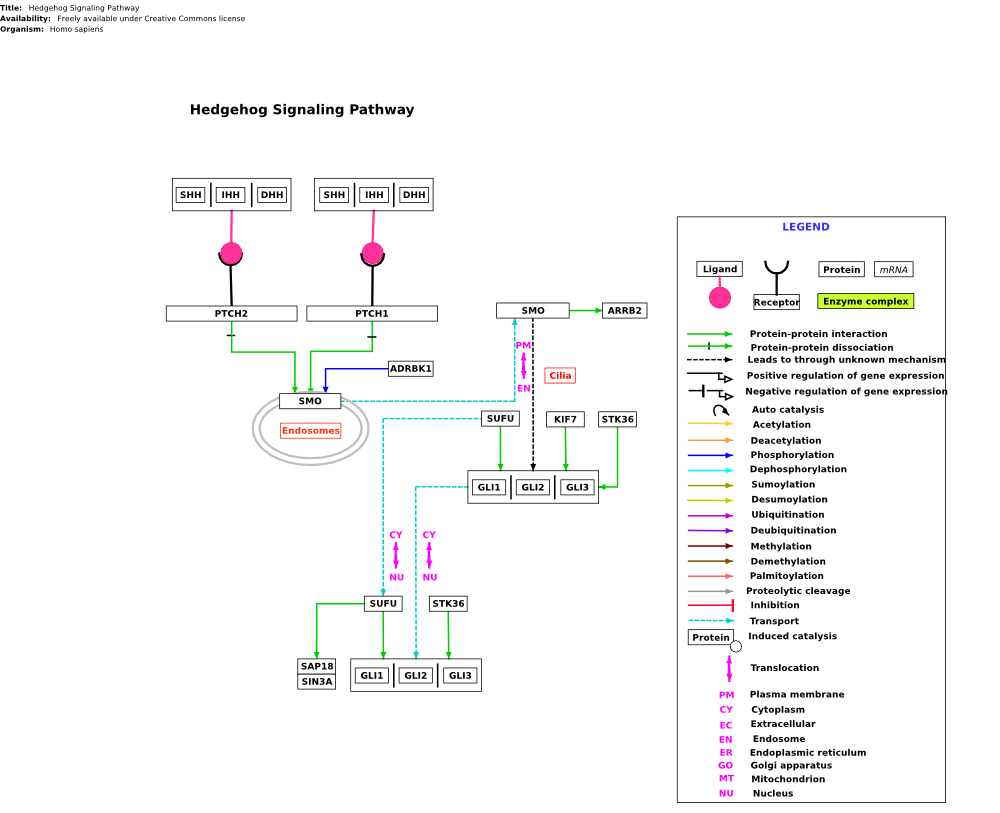
Targeting the hedgehog signaling pathway with a smoothened antagonist, GDC-0449, in combination with gemcitabine achieves partial response in some metastatic pancreatic cancer patients; and targeted depletion of the multi-functional cell membrane protein RLIP76 can cause pancreatic cancer tumors in mice to regress, according to two studies presented at the American Association for Cancer Research‘s Pancreatic Cancer: Progress and Challenges conference, held from June 18 to 21 in Lake Tahoe, Nev. - RLIP76 contributes to pancreatic cancer cell resistance to chemotherapy and radiation | Science Codex
Researchers at the City of Hope Comprehensive Cancer Center have not only identified a protein that allows pancreatic cancer cells to resist therapy but also developed a way to block it, according to results presented at the American Association for Cancer Research’s Pancreatic Cancer: Progress and Challenges conference, held here June 18-21.”Cancer of the pancreas is notoriously difficult to treat because it usually presents at late stages due to minimal or nonspecific symptoms in the early stages. Thus, surgical treatment is either not possible or fails to cure most patients, resulting in a dismal prognosis ? 90 percent of patients are likely to die within a year,” said Sanjay Awasthi, M.D., professor of medical oncology and therapeutics research, and diabetes, endocrinology and metabolism at City of Hope in Duarte, Calif. - Metformin treatment caused cancer stem cell death in pancreatic cancer cell lines | Science Codex
Results of some preclinical trials have shown that low doses of the antidiabetic drug metformin may effectively destroy cancer stem cells, a group of cells that are considered to be responsible for tumor initiation and, because they are resistant to standard chemotherapies, tumor relapse.In addition, when metformin was combined with a standard chemotherapy used for pancreatic cancer, the combination treatment was able to efficiently eradicate both cancer stem cells and more differentiated cancer cells, which form the bulk of the tumor, according to data presented by Christopher Heeschen, M.D., Ph.D., at the American Association for Cancer Research’s Pancreatic Cancer: Progress and Challenges conference, held in Lake Tahoe, Nev., from June 18-21, 2012. Heeschen is professor for experimental medicine at the Spanish National Cancer Research Centre in Madrid, Spain. - Medical News: Pancreatic Ca Surgery Doable with Drug Combo – in Oncology/Hematology, Other Cancers from MedPage Today
Four patients with unresectable pancreatic cancer had margin-negative surgery following treatment with a three-drug chemoradiation regimen, results of a small clinical trial showed. - Medical News: Drug Combo Active in Advanced Pancreatic Ca – in Oncology/Hematology, Other Cancers from MedPage Today
Half of patients with advanced pancreatic cancer had objective responses or stable disease when they received a hedgehog pathway inhibitor in addition to standard chemotherapy, results of a small clinical trial showed. - Vitamin D and Pancreatic Cancer Patients Link – Kansas City, Missouri News
Pancreatic cancer patients with a genetic marker linked to increased expression of the receptor for vitamin D have higher rates of overall survival. - Leukemia inhibitory factor may be a promising target against pancreatic cancer
Pancreatic cancer is one of the deadliest forms of cancer, defying most treatments. Its ability to evade therapy may be attributable to the presence of cancer stem cells, a subset of cancer cells present in pancreatic tumors that drive tumor growth by generating bulk tumor cells. Cancer stem cells are notorious for their ability to resist traditional chemotherapies.However, scientists at the University of California, San Francisco (UCSF), have discovered that two proteins ? KRAS and leukemia inhibitory factor (LIF) ? help create cancer stem cells and that the latter can be targeted to block them. - Promising Pancreatic Cancer Treatment | Medical News and Health Information
There are more than 42 thousand new diagnosed cases of pancreatic cancer in the U.S., and of those, more than 35 thousand have resulted in death. Now researchers are looking at a new treatment that could change how we view pancreatic cancer. - Everything you need to know about pancreatic cancer and the future of treatment | Fox News
Pancreatic cancer is the fourth leading cause of cancer death in the United States. According to the National Cancer institute, approximately 44,000 people will be diagnosed with pancreatic cancer in 2012, and 37,000 will die from the disease. Within the first year of diagnosis, nearly 75 percent of pancreatic cancer patients die.Read more: http://www.foxnews.com/health/2012/06/20/everything-need-to-know-about-pancreatic-cancer-and-future-treatment/#ixzz1ydkZU7HU - Study Provides Insight Into Pancreatic Cancer Progression, New Target for Treatment
Researchers at NYU School of Medicine have made a key discovery that could help doctors treat one of the deadliest cancers.
A new study reveals a strategy used by pancreatic cancer cells to tinker with the immune system in a way that enables them to escape destruction by specialized immune cells.
Articles
Here are the latest additions to the Mendeley Pancreatic Cancer Genomics collection.
- Sensitivity of BRCA2 mutated human cell lines to Aurora kinase inhibition.
- A phase I/II study of the Src inhibitor saracatinib (AZD0530) in combination with gemcitabine in advanced pancreatic cancer.
- K-ras mutations in the plasma correspond to computed tomographic findings in patients with pancreatic cancer.
- Combination of hedgehog signaling blockage and chemotherapy leads to tumor reduction in pancreatic adenocarcinomas.
- ADAM9 expression in pancreatic cancer is associated with tumour type and is a prognostic factor in ductal adenocarcinoma.
- Circulating tumor cells in the diagnosis and management of pancreatic cancer.
- The Src family kinase inhibitors PP2 and PP1 effectively block TGF-beta1-induced cell migration and invasion in both established and primary carcinoma cells.
- H19-promoter-targeted therapy combined with gemcitabine in the treatment of pancreatic cancer.
- Inhibitory effect of non-anticoagulant heparin (S-NACH) on pancreatic cancer cell adhesion and metastasis in human umbilical cord vessel segment and in mouse model.
- Oridonin enhances antitumor activity of gemcitabine in pancreatic cancer through MAPK-p38 signaling pathway.
- Disruption of p16 and activation of Kras in pancreas increase ductal adenocarcinoma formation and metastasis in vivo.
- MicroRNA Alterations of Pancreatic Intraepithelial Neoplasias.
- ATM Mutations in Patients with Hereditary Pancreatic Cancer
- VAV1: a new target in pancreatic cancer?
- Ductal pancreatic cancer in humans and mice.
- Oncogenic KRAS activates hedgehog signaling pathway in pancreatic cancer cells.
- N-cadherin haploinsufficiency increases survival in a mouse model of pancreatic cancer.
- Mutant p53 drives metastasis and overcomes growth arrest/senescence in pancreatic cancer.
- Inactivation of Brca2 promotes Trp53-associated but inhibits KrasG12D-dependent pancreatic cancer development in mice.
- Deletion of Rb accelerates pancreatic carcinogenesis by oncogenic Kras and impairs senescence in premalignant lesions.