In a previous post, I described ClinVar, the NCBI’s database of clinically relevant protein variations. Recently, I came across SwissProt’s version of this database called SwissVar. SwissVar is designed to help you answer two questions:
- What diseases is this protein involved in?
- What proteins have been found to be mutated in a particular disease?
The following link will take you to the search page as shown below:
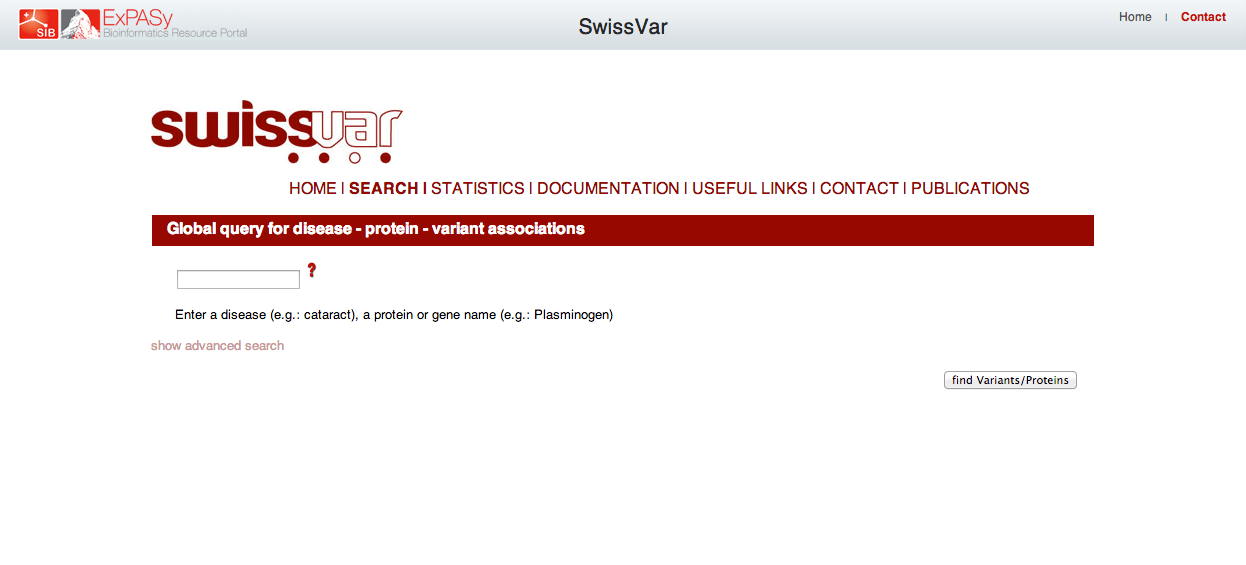
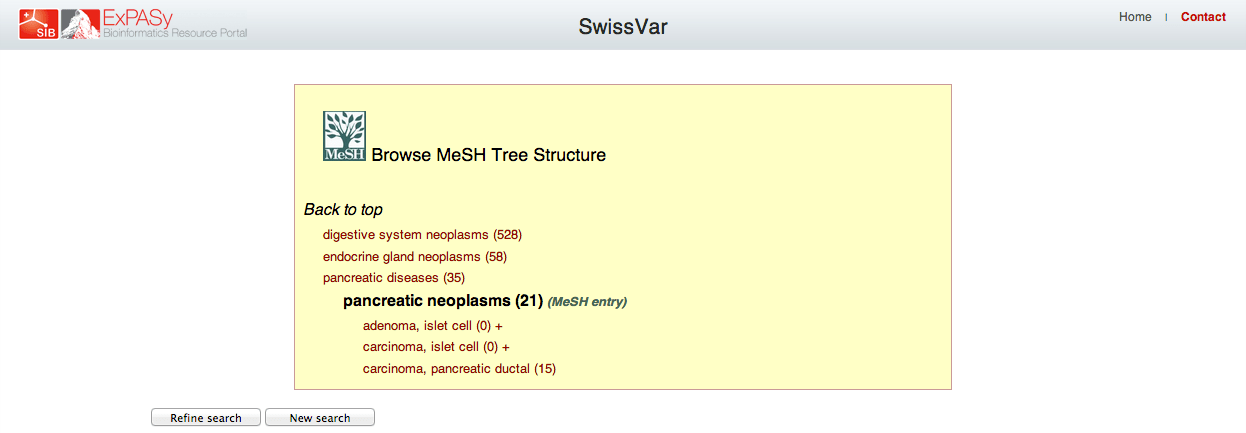
Enter a disease name or protein symbol to get started. In my case, I started by looking for proteins involved in pancreatic cancer. At the top of the results page, you’ll see a Medical Search Heading (MeSH) term browser. This lets you refine the search in case the search term you used was either to broad or narrow.
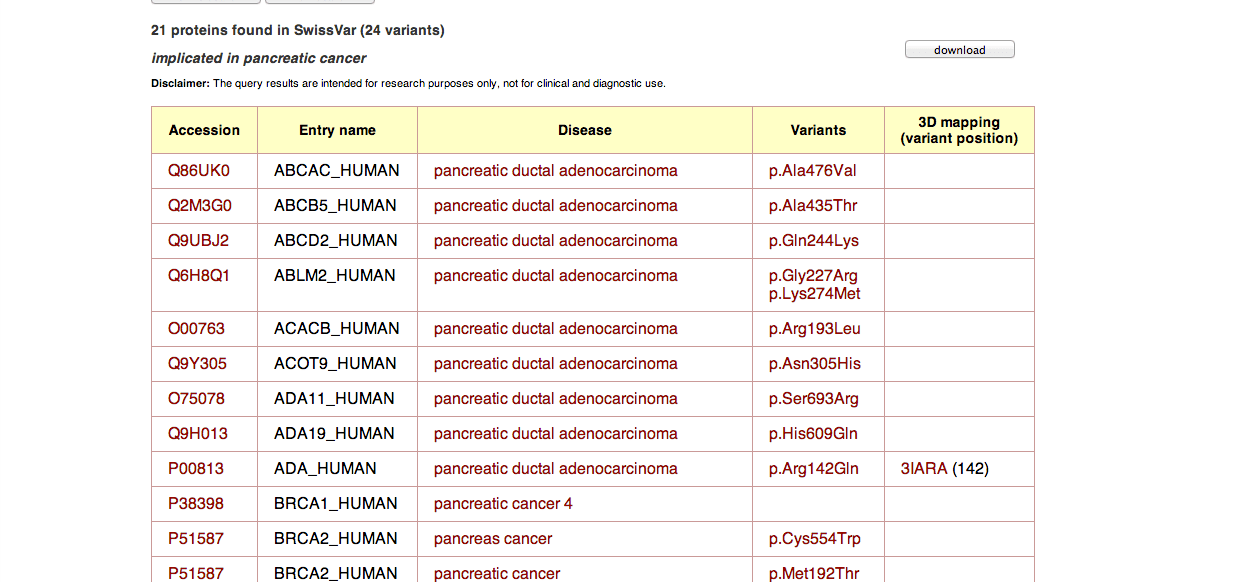
If you scroll down past the header you’ll see a list of all known protein variants for pancreatic cancer. To get more information on a particular protein, simply click on the protein accession. The Entry name column, shows the UniProt symbol for the protein. The entry in the Variants column tells you the nature of variation. In the first record, we can see that Alanine 476 was changed to a Valine.
Let’s take a closer at a variant record to see what kind of information is available.
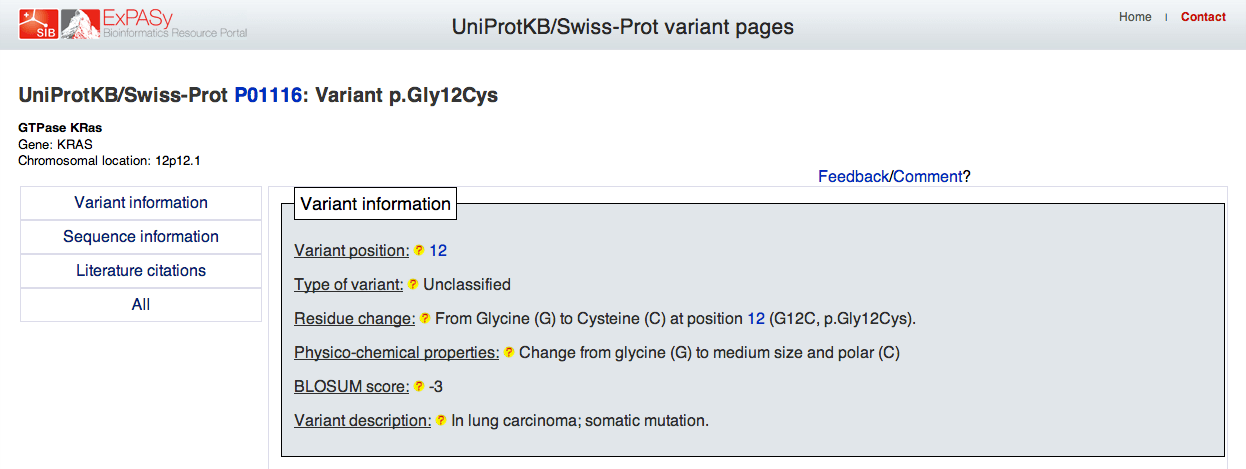
Here we an see the position of the variant, the type of variant, how the variant changed the residue, and the disease that the variant was associated with. To the left, we can see a navigation pod, that lets you quickly move to a particular section of the report.
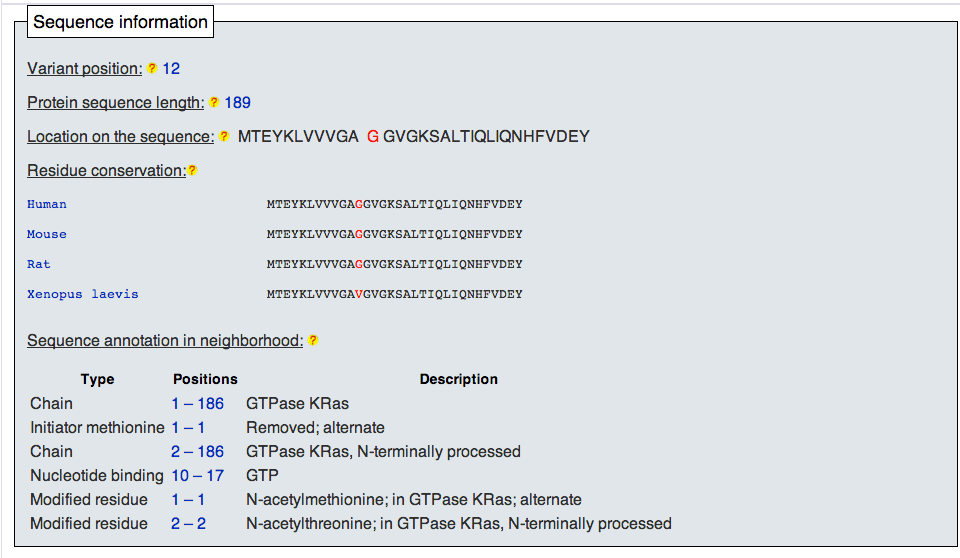
In the Sequence information section you can see more information about the protein sequence, including the location of the change within the context of the protein. You can see how well-conserved the residue is, making it easier to select a particular model animal.
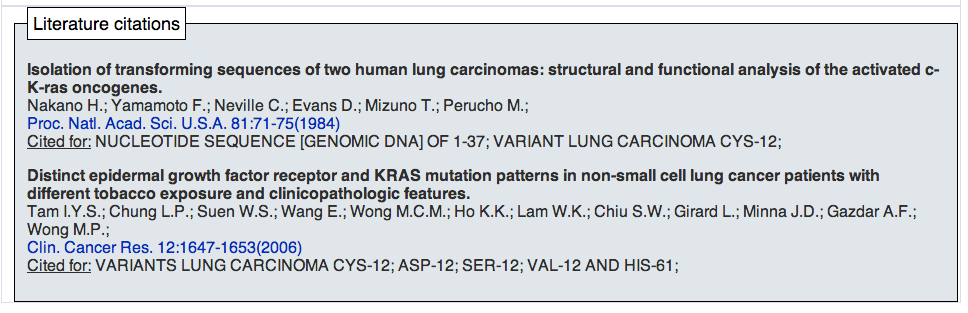
Lastly we can see the literature citations that substantiate the claim associating this variation with a disease.
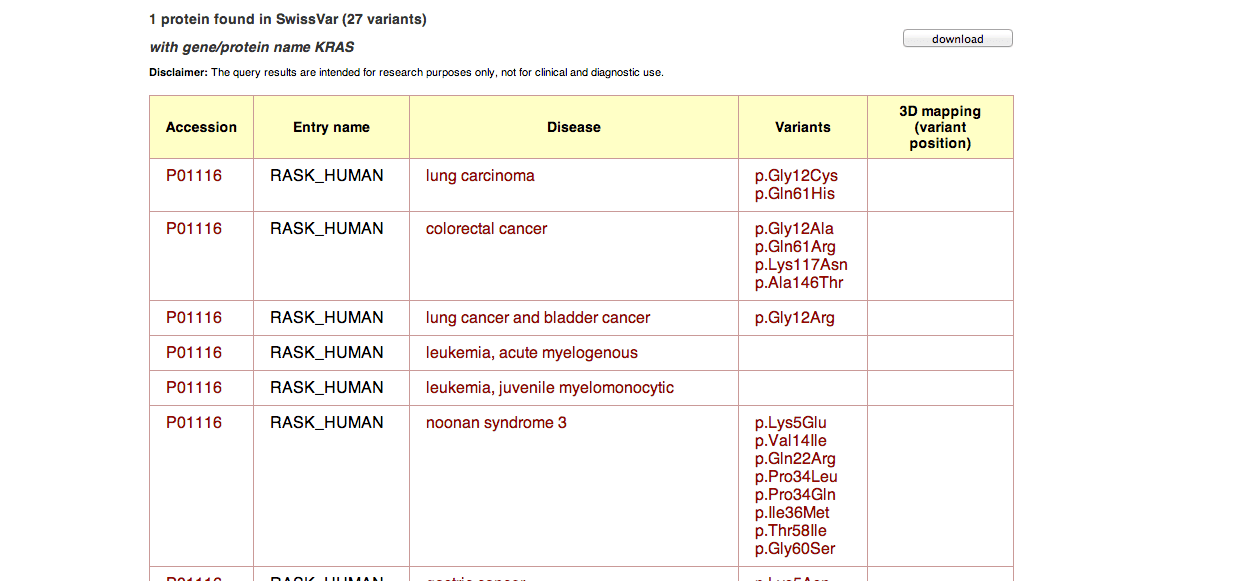
But what if we want to see all known variations (and disease associations) for a particular protein? Starting at the main search page, we simply enter the symbol for the protein (in this case KRAS).
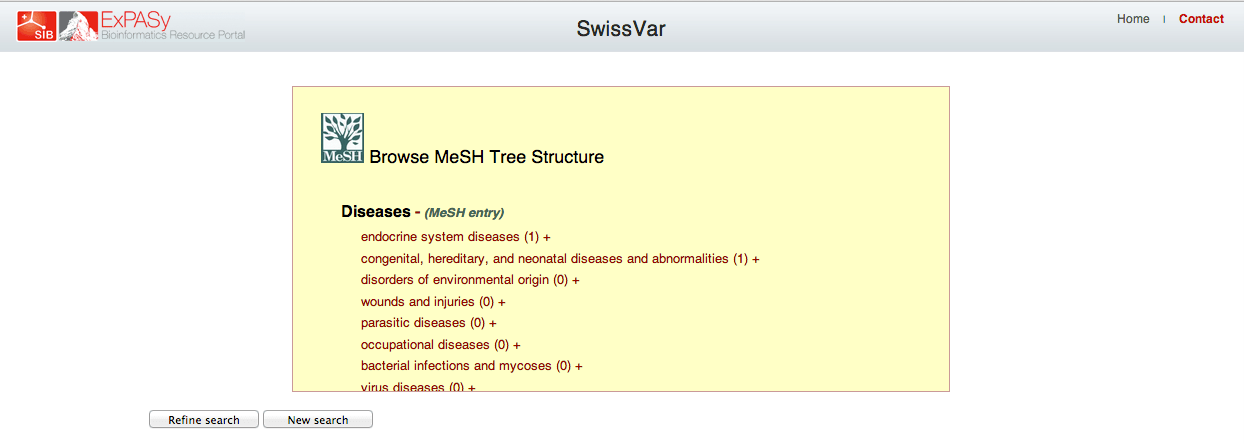
In the search results header, we see the same MeSH browser, but in this case, it shows us a list of all known disease types associated with mutations in KRAS. If we scroll down further we see a list of all known variants.